

Welcome, aspiring polyglot! Out of all the things instructors can provide, the most helpful of all is probably the ability to connect the dots. That is to say, to take what you know and use it to propel you forward in a way that you might not believe possible. As an adult learner, your biggest advantage is the ability to infer. Having someone who can maximize that ability by your side is game changing.
Words you already know
One of the ways that someone might connect the dots for you is by showing you all of the words you already know, even if you don’t exactly realize that they are in a different language. For example, the German word paprika. Of course, you likely recognize the word paprika as a powdered red spice that you have always had in your cabinet. Did you know that it is just the German word for bell pepper?
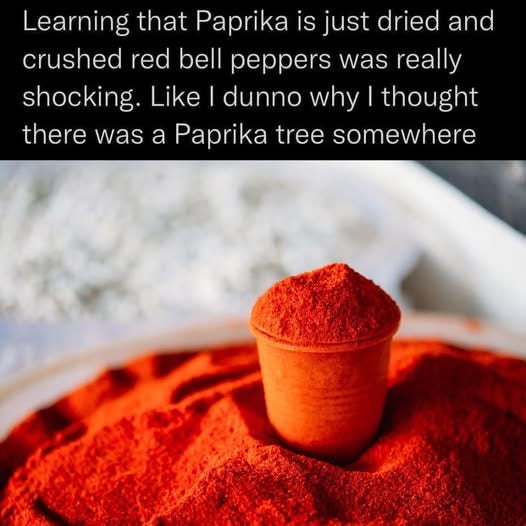
So, paprika is just dried bell pepper. Turns out, a kindergarten is a garden of children. Gesundheit is interchangeable with bless you, right? Well, kind of, and much like “salud” it means health. Fondu? It’s just cheese, right? Well, yes, it is melted cheese. Fondu is the past participle (if you don’t remember what that is, you really need to read this article) of the French word “fondre” which means “ to melt”.
Have you ever chanted “encore” at a concert? You were yelling “again” at the performers, just in French. Your souvenir from the last vacation? Something to remember the trip because souvenir is the French word for remember. Everyone knows what salsa is, but not many know that salsa is just the Spanish word for sauce. That is the biggest difference between a good and a great instructor.

You already know all of these things. You just haven’t had the connection made for you. Out of all the classes I have, my favorite are always the ones where someone has an out loud “ah ha” moment. The added bonus of doing this is that you now have a word that you know well and use correctly in English to add to your repertoire in your target language.
Asking questions
That said, I know not everyone is interested in having an instructor. So here are some ways that you can start to connect some dots on your own. First, be curious. You have to ask questions about everything in order to uncover any connection. Is this a necessary step to becoming fluent in a new language? Not at all. Will it accelerate the process and make all subsequent languages easier to learn? Yes.
Curiosity is a super power, much to the chagrin of our dear cat fellow. If you aren’t asking “why” multiple times per day, you have an opportunity to improve. For more on that, read this:
Curiosity: An Essential Second Language Acquisition Strategy

Welcome, aspiring polyglot! While there are many second language strategies, there are few that compare with the proper weaponization of one's own curiosity. Proper utilization of your natural curiosity will take you far in any field of study, language learning is no exception to this rule. Endeavoring to learn a foreign language is difficult enough, but without curiosity it becomes that much more difficult.
In short, never take things at face value. Is it possible that there are no connections to be found between words or concepts that seem related? It’s certainly likely. But that doesn’t diminish the utility of the times when it does work. Besides, the worst case scenario is that you now know a few more obscure facts that you otherwise would not know. Doesn’t seem a terrible trade off to me.
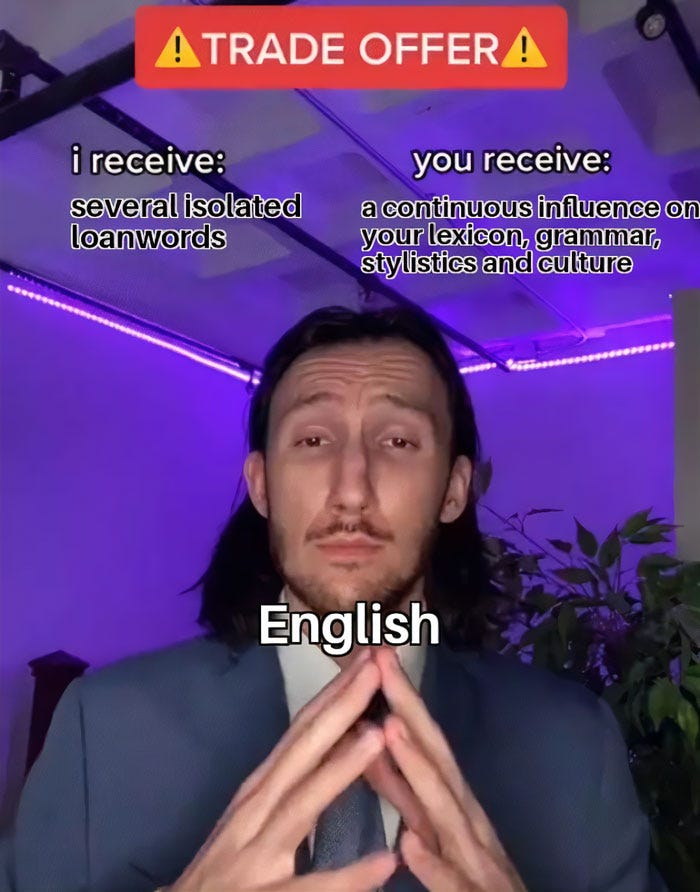
At the end of the day, this is the baseline analysis you should be putting into everything throughout your daily life. Maybe not all day every day, but when you pay close attention to the words you, and other people, use it can be rather illuminating. If nothing else, I would encourage you to expect more from yourself. Instead of learning one word, learn one root word and 5 variants, for example.
The value of vocabulary
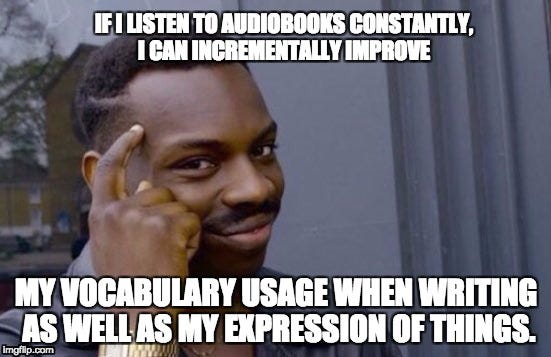
Aside from learning 5 new words for every new word you learn, improving your vocabulary in your native language comes with the added benefit of growing your vocabulary in other languages. Nothing comes from nothing. That is to say, every word you use comes from somewhere, has a history, and can be investigated to reveal more information.
Some words are higher ROI than others, but getting in the habit of pulling the string until everything unravels makes it easier to do each subsequent time. Curiosity, much like courage, is a muscle that must be worked and flexed over time in order to improve. Start small. Look up the etymology of 1 word this week. Choose a word that you know has related words across languages.
Dormant
Hope
Believe
Edifice (and in this, to build)
These five words will give you not only a ton of other words to learn and work with, but an overall better understanding of English and, for native English speakers, it will show you some of the ways in which your mother tongue is rooted in so many other languages. Native English speakers have a massive advantage relative to other language learners.

But looking into the roots of words is not the only way to use your curiosity to your advantage. You can, and should, also be seeking out synonyms at every opportunity. Diversify your vocabulary and find ways to express yourself in ways you have not previously. For those of you who have been taking my advice to write more often, you can simply go back and make improvements to your writing.
Conclusion
I recently wrote an article about learning languages as an adult that seemed to resonate. In that I mentioned how adults have a unique advantage over children when it comes to learning languages and that is the ability to infer. While this remains true, it is entirely irrelevant if you are not willing to take the time to build up the reference points you have available to you.
At first it might not feel like you are getting anything out of the exercise, but over the course of just a few weeks you can build in dozens of new hand holds to climb when the time is right. Unfortunately, much of this is more akin to farming than it is to hunting, but both yield results when done correctly. Not only that, but with languages you have the freedom to do both; and you should do both.

Working on your French? Paid subscribers get access to the French medical handbook, the full language patterns guide, and every deep dive in the archive. Start your free trial here.
If you want personalized instruction, I offer private French courses tailored to your level and goals, from complete beginner to professional fluency. One of my students went from years of Duolingo stagnation to watching films and holding conversations in French within 8 weeks. His full review is here.
And this is why a child will ask 'why' throughout the day. We should endeavor to be this child as an adult. Why!