

Welcome, aspiring polyglot! As we age, it is very easy to slow down or even stop learning altogether. After all, if you spent the first twenty or thirty years of your life learning, surely by your forties it is time to use the knowledge rather than continue accumulating it, right? Though, if you are reading this, you likely do not think like that. You do, however, know someone who thinks like that.
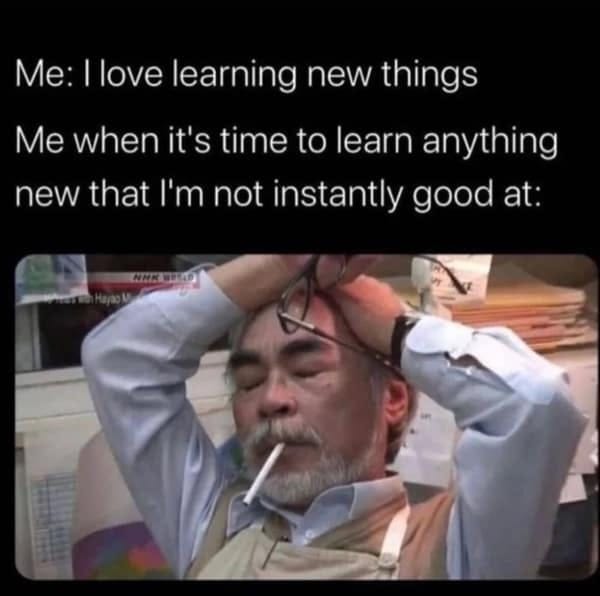
I would go as far as to say that if you haven’t felt that way at some point, you are lying to yourself. Almost once per week (maybe month..) I have to learn something new and there is a part of me that would rather not. A part of me that would rather find a way around learning than take the time to learn. That is, until I had a child.
One million mistakes
Of course I still feel it sometimes, but the call of complacency is easily drowned out by the desire to be better. As cliché as it is, children are pretty inspirational. My daughter is currently learning how to walk. She crash boom bangs to the ground a lot. Then, she looks up at me, holds both her hands up, and says “dada” and we try again.
Failure is part of my job. I try to ensure my students make over 1000 mistakes while working with me because the first 1000 mistakes are only the first 1000. There are going to be thousands, if not tens of thousands, more throughout their time speaking their target language. Getting used to failure, in a ~safe~ environment (though they call it bullying) is crucial for long term success.
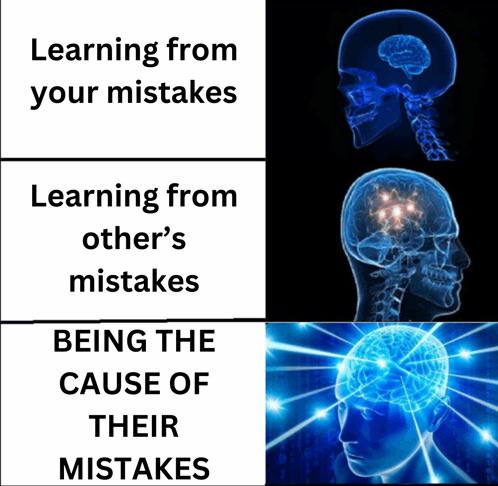
I say this a lot to them, and probably too much to my friends and family, but adults are just large children. What works for children in language acquisition will work for adults, too. Failure, repetition, mimicry, perseverance, probing, full sending, all of these things I am blessed enough to watch my daughter do every day are things I now try to do every day.
At one point in your life, you were not capable of learning from the mistakes of others. Literally everything you did was a test. A probe into the unknown. What worked you either consciously or subconsciously tucked away that information and probed further. That is how you discovered the world. Now, with all that you know, you can learn things more effectively because every probe you send out has the context from your years of life and experience.

You, as an adult, can learn from the mistakes of others. I have discussed the advantages you have as an adult in another article, if you missed that be sure to read it and start making the most of those as soon as possible:
It's Never Too Late

Welcome, aspiring polyglot! Currently I am not working with a single person who does not have a 40+ hour per week time commitment to work. In fact, I have never worked with anyone who wasn’t working full time. Children may learn languages easier, but adults have advantages children do not. You have discipline, existing language scaffolding, motivation, …
Getting back up again
Here is where children truly do have an advantage over adults. The thing about kids is, while they certainly do feel pain, they have a remarkably short memory for it. “Kids bounce” as my parents always used to say. Turns out, it’s true. Adults, on the other hand, can become incredibly pain averse as they age.
Everyone has their own experiences, but it has been my observation that the people who are the most pain averse are the ones who spend the most time and energy avoiding pain. In a strange way, accepting the pain of failure or frustration or embarrassment or even physical pain when it comes to improving in fitness, helps in tolerating more in the future.
Perhaps that is why it is such a tough sell. “If you take this pain now, the pain you take on later will hurt less” isn’t exactly a winning message for most. However, I have no interest in lying to you. Almost all of my methodology is based on this exact quote/mantra/motto. It’s why I prefer the “sprint up the side of the mountain” approach to the “switch back” method.

It’s why my students start writing 10+ sentences right away. Why they read The Count of Monte Cristo or Game of Thrones or Harry Potter or Don Quixote or 100 Years of Solitude starting on day 1 when they learn the alphabet. It’s why we cover a minimum of 1 verb tense per week. More pain now, less pain later. It never gets easier, you just get better; and failing forward is the fastest path.
If you want painless, I recommend Duolingo! No pain, but a forever process. That said, if you spend a year on only Duolingo and try to talk to some native speakers, the pain may be just unbearable enough to call me to start some classes; and I promise I take your education more seriously than this:

One thing you, as an adult, do have that a child does not is an understanding of time. A child has no clue what it feels like to have a breakthrough or to master a new skill. At least not in the same way as an adult has. That means you can look back to the other times in your life where you felt like the grind would never end and realize that there is a light at the end of the tunnel.
Another cliché that is a propos here is that it is always darkest before the light. Almost invariably during your language acquisition, you are going to feel the most like a failure right before you have a tremendous breakthrough and leap forward. If you are feeling that, what you might need is a rest day. Here is how to do that right:
Taking a Much Needed Break From Language Learning

Welcome, aspiring polyglot! When I first got started teaching I never thought about rest days. In fact, as a child I always thought that seasonal breaks were largely to ensure students remained engaged in school activities. I’m still not sure that the breaks are placed where they are for this purpose, but they are spaced out in a way that can be advanta…
Short term memory loss
The final skill you need to remember (since you were once incredible at this) is how to forget. If you cling to every missed word, every incorrect verb tense, every improperly applied descriptor, is going to drive you crazy. In the moment, let it all go. Try to remember it after the fact (if you are anything like me, this won’t be a problem as the perfect response will come to you hours later) and make the appropriate corrections.
If you have ever played music at a high level, you know the number 1 rule of playing live: do not stop. During practice, it is very common to stop and take it from the top, but you cannot do that during a live performance. Instead you keep playing as if the mistake never happened. This is the exact mindset you need whenever you are speaking your target language with a native speaker.
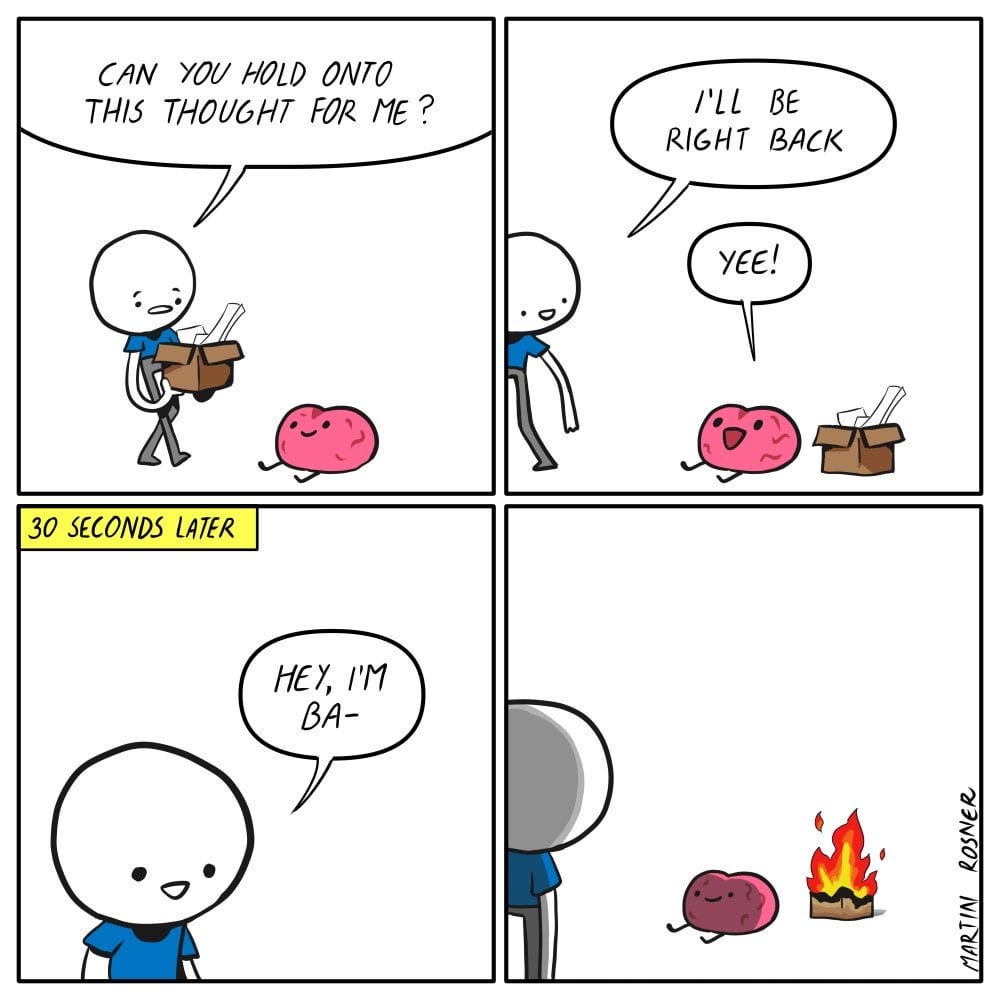
As much as it doesn’t seem like it (and it shouldn’t) your conversations are a performance. Only in so far as you are trying to pretend you actually speak a language fluently when you almost certainly do not. That is not a bad thing. Just treat it like the performance it is as a master of the field. Skate over your mistakes, ask for clarification when necessary, and continue the flow to the best of your ability.
You will play how you practice, so if your practice does not reflect your desired conversational outcomes, it may be time to re-evaluate. Once you get enough repetition in practice, move on to iteration. In fact, you might want to move onto that sooner rather than later. Read more on that here:
Relying on Your Memory for Second Language Acquisition

Welcome, aspiring polyglot! Recently I was charged with recounting a story. Most of it had to do with how I learned French and how my language acquisition methodology came to be. As I was telling this story, part of me began thinking of how I would tell it in French. After all, most of those experiences took place when French was the only option.
Conclusion
I’m pretty sure my little girl is going to walk for the first time this week. That was the primary inspiration for this post. As I was writing it, though, I just kept thinking of how much my methodology overlaps with the way she attacks the world. Perhaps a genetic component to that, but I think it has a lot more to do with being hard heading and willing to fall than any genetic predisposition.
It may take a little buy in up front, but developing a thicker skin, a harder skull, and a better pain tolerance is worth it in the long run. You will see ripple effects across your life from fitness to nutrition to learning anything and everything. Children get a lot right. Especially learning through failure. In this case, it is worth following their lead. I am rooting for you.

Exams reward a specific kind of preparation that most self-study methods don’t provide. Paid subscribers get access to exam-focused strategies and frameworks in the Guides library designed to complement what you learned in this post.
Need to hit a score by a specific date? I build exam-specific private courses with targeted preparation for TOEFL, CLEP, DELE, DELF, and more. One of my students passed his TOEFL and got accepted to a New York university after working together for three months. Read his story and others here.