

Welcome, aspiring polyglot! As we are over halfway through this year I wanted to take this opportunity to give you all some exercises to take your language acquisition to the next level. It can be easy to fall into the trap of repeating the same few things and hoping the progress they have experienced thus far will remain consistent.
This can, unfortunately, lead to frustration as the inevitable plateau arrives. If that sounds like something you have experienced, this will be perfect to get you back on the right path.
1. Reading
Going out of your way to try and read things outside your purported language level is a powerful way to improve your language skills. Sitting down and going slowly page by page, writing down every new word and phrase you learn is time consuming, but it works wonders. Start with single pages and see how far you can work up. You will be shocked at how quickly you reach a point where you are only looking up a few words on every page.
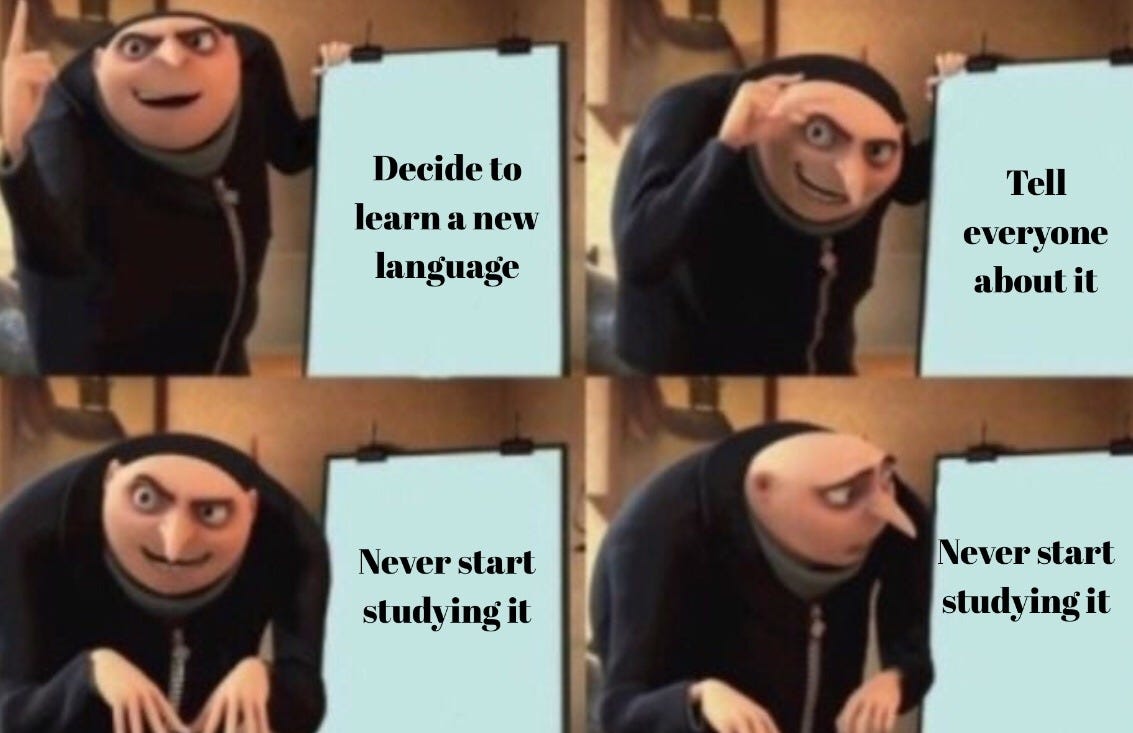
In order to get to that point, however, you have to start. Sometimes starting means only doing half a page or even just a paragraph at a time. If starting with classic literature sounds a bit too intimidating, that’s okay, but you need to pick something to start reading. Once you are able to understand over 90% it is probably time to pick up something more difficult and challenge yourself. It can be easy to fall into the trap of using materials that are comfortable, but this will hold you back in the long run.
2. Writing

This is probably the most versatile component, which can also make it the most difficult to implement. Sometimes having too much freedom can be paralyzing. With that in mind, here are some ways you can start writing immediately so you don’t really have an excuse to avoid it anymore:
Journal
Keep a daily journal where you talk about your day. That is the perfect way to start learning how to express common sentiments and discuss your day with potential friends later down the line. Anything you write in your journal will be something you will likely end up saying to someone when traveling with your newfound bilingualism.
Text
If you have friends who speak your target language, texting or messaging back and forth with them can help immensely. When I was learning French, writing back and forth with classmates taught me not only the words I would need to use, but also the words that are less useful. Formal language education often entails learning about things you will never use and it is often lacking in teaching slang and colloquial language. Texting back and forth with native speakers can mitigate this issue.
Create a story
Writing a short story or book is the next level way to approach your writing time. The primary reason for that is your knowledge and language skills will evolve over the course of the writing experience and it will be made self evident quickly. You can take this story wherever you want and make it as long or as short as you want, but you have to keep coming back to it consistently for at least three months. If you do this you will find writing starts to get pretty easy.
3. Listening
There are two ways to approach listening and one is easier than the other, but it is also far less effective. The first path and one that you should immediately integrate into your daily life is background noise.
Background noise
It has become commonplace to have some sort of sound going on throughout most of the day. You can use this to your advantage by simply ensuring your background noise is in your target language. Whether that means throwing on a Spanish podcast or listening to German rock music instead of something in English. Do this often enough and find ways to replace your native language with your target language and watch as you are slowly but surely able to pick out more and more words, understanding more and more over time.
Active listening
Working on your listening skills actively is slightly more complicated as it requires active participation. When you are doing this, you have to sit down and actually prepare to write things down. The best exercise I know of for this is called ‘dictation’ and it simply means listening to something, a video, song, podcast, TV show, whatever it may be, and write down everything you hear. This will lay bear any deficiencies in your language skills.

Doing this over and over again will allow you to zero in on precisely where you are weak so you can find ways to combat those weaknesses. The way it works is simple, pick a piece of content, listen to it 1 minute at a time, write down everything you hear. Having a transcript can be helpful which is why YouTube or Netflix are always good options. After the first time through, try again, then again, and again. Finally, put on the subtitles or transcript and check your work.
4. Speaking
As far as I know, there are three ways to practice your speaking and the first and most obvious is probably just speak. Find native speakers or learners with whom you can converse and speak with them as often as possible. Make your mistakes and challenge yourself by using new grammar structures you are learning along with new vocabulary words you come across. Native speakers are ideal because they can help with corrections, but any speaking is better than no speaking.
Use your phone
If you don’t have access to unlimited supplies of native speakers then you will have to find another way. Talk to text is probably the most accessible way to get started right away. Change your phone to your target language and start using the text to speech function to practice your pronunciation and fluidity. Chances are, if the phone can understand you someone you will talk to later in life will also be able to understand you.

Start reading aloud
Another way to practice your speech without needing another person is by reading aloud. What you will be focused on here is different because it won’t be about thinking of what to say. Rather you will be focused on fluidity and continuity as you work from one sentence to the next. Practicing in this way is great because you can do it alone without fear of making mistakes in front of someone else. It is one of the few ways to practice speech without fear.
Mimic things you hear
The other way to practice your speech without having to fear making mistakes is through mimicry. When you are learning to speak, much of your focus should be on fixing any deficiencies in your accent. Mimicry is by far the best way to do this. Whenever you hear a new word, repeat it aloud and try to mimic the person who said it. That is, of course, assuming you are working with materials from native speakers. If you want to sound like them, mimicking them is the perfect way to make that happen; and you can do it as often as you need.
Conclusion
People often ask what the best day to day strategy is and the truth is that there is no perfect way. Learning is an individual exercise in most cases and language acquisition is no exception. The above are some exercises you can do, but which ones you choose to do and when is entirely up to you. So long as you are hitting each of these categories consistently throughout the week you will be in a good place.
Mix and match and build yourself the perfect framework for your own personal language acquisition. If you need help building that framework, check out this article:
Developing a Framework

Welcome, budding polyglot! In order to master language acquisition, it is imperative that a proper framework be adopted. The times of sitting and memorizing flashcards have come and gone. There is no grade anymore. Language acquisition goes far beyond what is provided in schools and attempts at adopting a public education framework would leave anyone discouraged and feeling inadequate. But how does one go about overcoming this when they essentially have never experienced anything different? We will answer that question here. We appreciate you taking the first step to improving your life for the long term.
Second language acquisition is no easy feat, it will be difficult irrespective of how you approach it. Using the strategies listed here can and will enhance and accelerate your language learning experience, it will not be easy. But you can do difficult things and be great, so continue to do difficult things and be great. I will be here by your side endeavoring to do the same.
Eager for more Second Language Strategies?
Exams reward a specific kind of preparation that most self-study methods don’t provide. Paid subscribers get access to exam-focused strategies and frameworks in the Guides library designed to complement what you learned in this post.
Need to hit a score by a specific date? I build exam-specific private courses with targeted preparation for TOEFL, CLEP, DELE, DELF, and more. One of my students passed his TOEFL and got accepted to a New York university after working together for three months. Read his story and others here.