

Welcome, aspiring polyglot! In one of my Spanish classes, I was working with a bodybuilder and something we realized is that having class on a day where he lifted heavily resulted in him being unable to think. This led to us instituting a “no class on leg day” rule. While it was feasible for us, as his competition was approaching and it would soon be complete, you will likely not have the luxury of such a choice when you are speaking your target language.

If you can do it tired, you can do it fresh
When I was a kid, my soccer coach used to say this all the time. He would frontload our practice with some pretty brutal cardio conditioning, then we would go straight into skill drills. Some people (definitely not me) would complain that it was much more difficult to move precisely after having sprinted for 30 minutes.

Apparently, that was the point. I understood the idea, even back then, but that did not make the training any more enjoyable. Now I feel a bit like a hypocrite, because I do the same thing to my students. I demand a lot thinking from my students early on in the class, then they have the privilege of speaking to me, using the things they are learning.
I grew partial to this type of exhaustion reinforcement during my time abroad. Anyone who has ever lived abroad - not travelled - knows that there comes a point in every conversation where you simply stop listening. You are hearing everything, you could even know the words, but nothing is entering your brain for parsing. You simply tune out.

This is a defense mechanism for you brain. Trying to understand everything all the time in a language that you do not have mastery over is exhausting and defeating. Two feelings your brain, if functionally as it should, will attempt to avoid whenever possible. I end every post with “you can do hard things” not because it is the norm, but because it is possible.
Decay is the natural state of things. It takes real, concerted effort to continuously build new things that will stand the test of time. Building, even when you’re tired, is going to be necessary. Anyone who has children probably already understands that. For those who do not, you have more time than anyone else and you should use it.

Ultimately, you don’t get to decide how you are feeling when someone is speaking to you. This is true in every language. You might by tired or hungry or thirsty or irritated or happy or relaxed or anything else. Since the possibilities are nearly limitless, the best thing you can do is train no matter what. Tired? Train. Angry? Train. Hungry? Eat, then train. Do it even when you would rather not.
Discipline
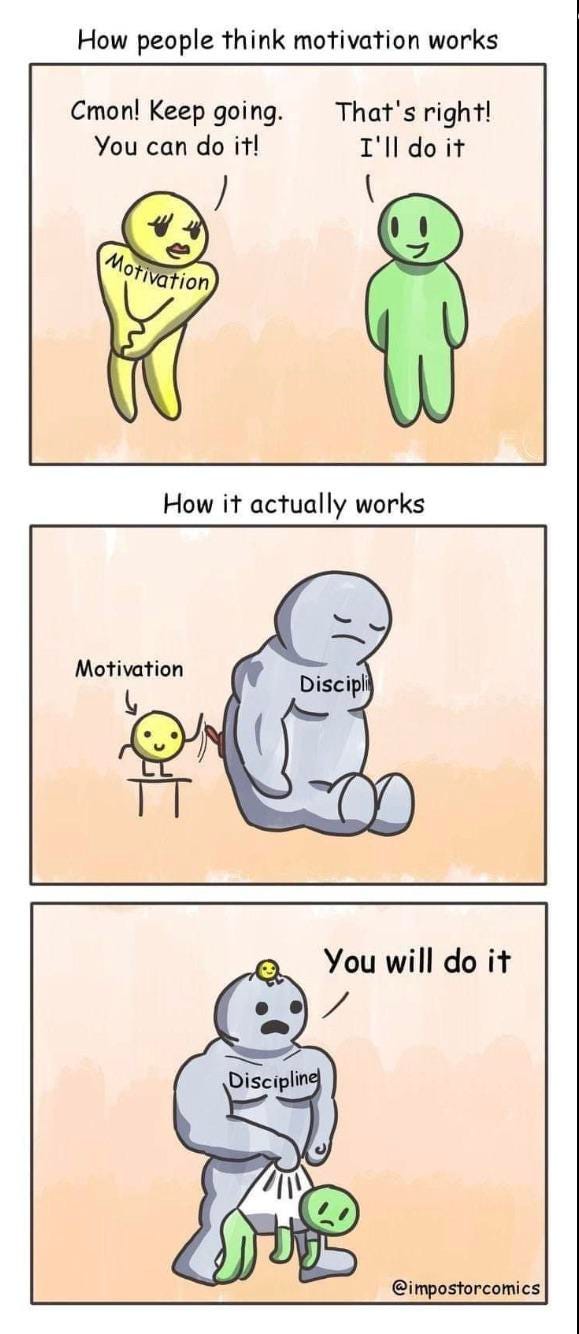
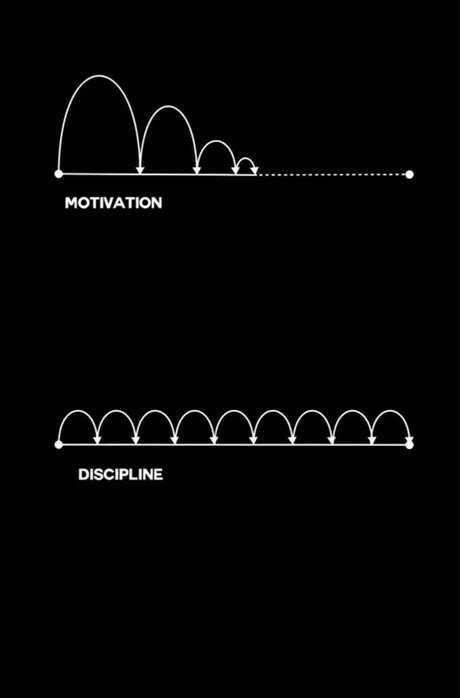
One of the more impressive things, to me, about the people with whom I work is that they are incredibly busy. Business owners, parents, skilled professionals, they all of things going on outside of foreign language acquisition. Which is probably why I have a lower tolerance for the “I don’t have time” excuse than most people. If it is a priority, you will find time.
That said, sometimes finding that time is easier said than done, so here are some ways you can do that starting today:
Before work, at lunch, and after work
Spend 30 minutes planning out your day in your target language. Giving your brain a reason to start thinking in the new language at the very start of the day is a great way to jumpstart your day.
Read out loud for 15 minutes. Test your accent and learn a few new words. Everyone has heard of the “make your bed” method, but that works because it qualifies as accomplishing a task at the beginning of the day. Reading out loud and learning 5-10 new words works the exact same psychological mechanisms.
Combine these two things and listen to a podcast or some music while doing a chore. Do the dishes and dance to some reggaeton, fold laundry and rock out to some German metal, walk the dog and listen to some French folk music. Two birds, one scone, as they say.
Do you spend a significant amount of time watching TV? Watch it in Japanese. Sinking your time into videogames? Play them in Polish. Do you prefer to read? You should be doing that in your target language anyway. In almost every situation, there is a way that you could and should add foreign languages into your daily routine.
Words you don’t want to use
Beyond simply doing things when you don’t want to do them, you will often be asked to do things you don’t want to when speaking a foreign language. What I mean by that is there will be vocabulary you learn throughout your language acquisition that will make you ask yourself “why am I learning these words, I never use these words in English”. For more on the importance of vocabulary, read this:
The Key to Language Learning: Vocabulary

Welcome, aspiring polyglot! One of the age old debates amongst linguists and language enthusiasts around the world is whether vocabulary or grammar is ultimately more important when thinking about second language strategies. While both certainly have their place, it is my personal belief that vocabulary is far more important than grammar and in this post I will attempt to explain why.
If that never happens to you, then you aren’t trying hard enough. The reality is, you don’t get to decide the ways in which people speak to you. You have no influence over their vocabulary, their grammar is their grammar irrespective of whether or not it makes sense to you, and the combination of the two is going to come whether or not you are prepared.
Sometimes the things you say will translate directly. When that happens it’s awesome! However, it will be roughly 50% of the time at most. The other half of the time, you are going to have to speak and use the language that you are learning in the way that it is used naturally. Trying to force your vocabulary into the new language will give away the fact that you are learning almost immediately.

The last thing you want to do when you are trying to speak with native speakers is force them to accommodate you. They are already working to help you improve your language, it is incumbent upon you, therefore, to carry your weight as well. Sometimes that means doing things you don’t want in order to rapidly improve your linguistic skills.
Things you don’t want to do
As terrible as it is, the truth is the more you struggle the more you learn. For listening, that means reading along, doing dictation, and passively listening. If you want to improve your listening skills, read this:
Stop Talking

Welcome, aspiring polyglot! As with most things, there are quite a few counterintuitive pieces of learning a new language. Learning to stop talking while you practice your speaking skills is one of those. Part of oral communication is listening and when you add active listening to your learning process you will find it is easier to speak. Finding ways t…
The other thing people fight me on every single day is writing. I know that no one likes to write. Well, I do, but I’m the weird one and I am willing to acknowledge that. However, the more you write the better you will think and the better you think the better you will be able to speak. If you want to improve your speaking skills, you need to write.
Reading difficult texts is your final challenge. All of my students read books. Real books. Not things that are written for children, but challenging texts full of rich vocabulary and varied grammar. Even if you are just starting out, you should be reading The Count of Monte Cristo, Don Quixote, Lord of the Rings, Harry Potter, and anything else that you believe will challenge you.

Chances are, one of your major ceilings is your vocabulary. Not only in your target language, but in your native language as well. By reading challenging texts, you give yourself the opportunity to raise both ceilings simultaneously. You might even find that the “difficult” words you come across are far more similar to their target language counterparts than other synonyms.
Conclusion
Ultimately, a near universal truth about mastering any skill is that the only way to truly become a master is to prove you are capable of completing challenges that are master level difficulty. A novice can read a children’s book. Anyone at an intermediate level can hold a conversation. If you truly wish to integrate the language, then you have to challenge yourself every chance you get.
Of all the language learning advice I give, this is probably the most important. Ironically it is also one of the least popular pieces of advice that I give. No one wants to feel like they are inadequate, but you can only master a skill if you are willing to be bad at it temporarily. Otherwise you condemn yourself to perpetual mediocrity. It will be difficult, but you can do difficult things and be great. So go out and do some difficult things and become great. I am rooting for you.

Everything in this post is part of a larger system. If you want the full methodology in one place, 3 Months to Conversational is available now on Amazon. It’s the same framework my private students use, designed for independent learners.
If you want that framework customized to your target language, your goals, and your schedule. Check out the private course options.