

Welcome, aspiring polyglot! The other day I gave someone some advice based on how I run my classes and how my students do things. Understandably, it seem implausible. So, to answer that comment, I wanted to talk about the progression table. One issue is that many of the exercises are the same, it is only the level that evolves with adaptation and improvement.
A1-B1
As mentioned above, most of the things I recommend people do are the same, they are just done at different levels of complexity. In fact, for the first three to six months (read A1 to B1) most of the content is beyond comprehension. That is intentional. If you understand everything, you are not learning anything. Besides, you won’t understand everything for years.
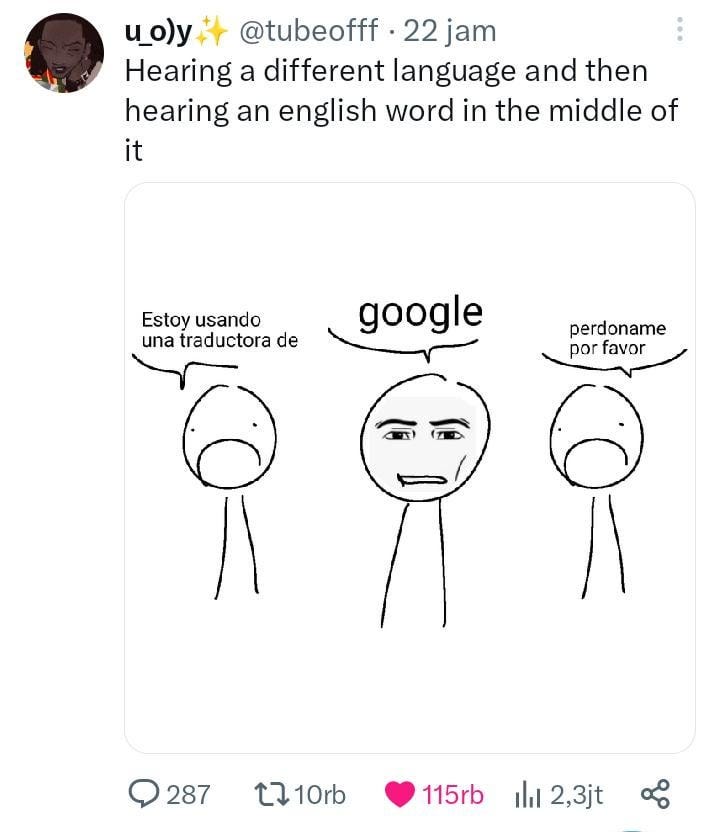
There is an interesting phenomenon where people who are learning a new language expect that they are going to understand everything at some point. While that might be true, the amount of time it takes to get to that point is more than most people expect. The reasons for this vary, but the biggest are dialect, accent, and cadence. You may understand everything regionally, but that isn’t everything.
At first, as much as it pains me to say this, the quantity is far more important than the quality. I was just telling a student this afternoon, “for everything that I can do, I cannot consume 1000 hours of content from native speakers for you.” The minimum to begin understanding anything approaching ~everything~ is 1000 hours of exposure. That is the true power of immersion, not just access to natives.
I created my Passive Input Guide explicitly for beginners because passive input is your easiest win as a novice in any new language. The point is never to understand everything immediately, that is wholly unreasonable. Rather, you should listen and give yourself a baseline. Write that baseline down. Then, spend the next three weeks pumping volume and see just how far you can get.
B1-C1
For those who are beginning to feel the difference after a month or two, you should begin working on much more difficult exercises. Dictation, or transcription, is by far the best thing you can do at this stage. Especially during the B1/B2 stage. Listening to native speakers and writing down what you hear seems like a waste of time, perhaps, but do it for 3 weeks and watch the evolution.
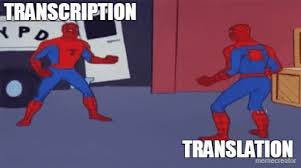
Focused listening is the biggest difference between the As and the Bs when it comes down to it. This is almost entirely due to the fact that Bs are able to do focused listening while the As are still trying to master basic sentence structure, cadence of speech, and colloquialisms. Once you can understand 50% of a sentence, it is time to sit down and dedicate 30 minutes to listening daily.
Start small, something with annunciated speech discussing a topic that you know already. Ideally you are working with a video that has an unfamiliar orator as the more you listen to one person the easier it will be to understand that one person. Diversifying your input is incredibly important at this stage. During your A phase, differentiation is less important. Now, however, it is imperative.
The final step in this progression is listening to multiple people simultaneously. I’ve written about this before, so if you missed that, catch up here:
Maybe Speaking Isn't the Hardest Part

Welcome, aspiring polyglot! Belief that speaking is the most difficult part of learning a new language is incorrect. There is a certain fear that comes with making mistakes while speaking, but that is different than overcoming an inability to understand what is being said. Since most people learn a language from one person, they believe they can underst…
In short, once you can understand one person speaking to you, you have hit the first false peak. Unfortunately, this is a lesson everyone has to learn sooner or later, so better to break the illusion sooner, in my opinion. Having a target to aim at is incredibly important, but if that target is wholly unrealistic, it will have a deleterious effect rather quickly.
Continued education
My program is called “3 months to conversational”. The reason behind this is because it is impossible to reach fluency within 3 months. However, once you can hold a conversation, the sky is the limit. In fact, once you can hold a conversation, the true battle begins. After all, it is all but guaranteed that you have quite a bit more you could learn about your native language, let alone your target language.
Building a content library is a terrific first step. Of course, if you have been following along with my methodology to this point, you should already have a solid repertoire, but now that you can hold conversations, it’s time to expand. For more on efficient expansion, read this:
Running Out of Brain Space

Welcome, aspiring polyglot! A few days ago, a long time friend asked me for some help creating a Hungarian resource sheet so he could learn it and communicate with his other half’s family and his son. One of the issues he brought up is that he is incredibly busy and feels like there is no space in his brain for more information. Fortunately, when it com…
If you are maxed out on content, it’s time to start moving towards integration. That is to say, rather than consuming content as part of your language learning process, start consuming it as if it is in your native language. Medical professionals should be studying medical vocabulary, lawyers should be reading legal texts, musicians should learn from those who speak their target language.
Specialized language is something I think everyone can benefit from and the deeper into your language acquisition you are, the more important it will become. For many, I often find that introducing it early on is beneficial, but you have to make that decision for yourself. If you are in the medical field learning Spanish or French, you can get my versions of specialized language to add in immediately.
Conclusion
I know how frustrating it is to listen to something and understand absolutely nothing. I have done it 5 times already and I am currently doing it again right now. It will feel like you are wasting your time. There is nothing I can do about that. You don’t have to trust me, but if you read this far, try.
Give me 21 days of immense audio exposure. Should you see no changes, leave a comment and I will respond to see what went wrong. At first the breakthroughs will come in singular words. In a sea of noise, there will be a small signal. More expose, more signal.
Your brain is a descrambler that is more effective and efficient than anything any human could possibly create. It just needs time to work. Often more time than anyone really wants. It is difficult, but you can do difficult things and be great, so get out and do some difficult things and become great. I am rooting for you.

If this post made you rethink your approach, the next step is replacing what isn’t working. My free downloadable PDFs give you exercises and frameworks that no app provides. Real output practice designed to get you speaking, not just tapping.
Want to skip the trial-and-error entirely? My private students go from zero to conversational in 12 weeks with a course built around their goals, their schedule, and their life. See what that looks like.