

Welcome, aspiring polyglot! Burnout is something that everyone struggles with while learning new things. The vast majority of the time it has far more to do with the daily activities than the material itself. A routine is a good thing, but without some flexibility almost anything will get exhausting. Variety keeps things interesting, especially during moments of stagnation.
Too repetitive
I’ve seen it more times than I can count. Someone has the wind stolen from their sails by a lack of variety in their source materials. Always working with the same material can feel nice because it is irrefutable that you understand more every session. But over a long enough timeline that feeling of progress becomes the equivalent of running on a treadmill.

Yes, no matter what it is great practice to get reps, but you will struggle to stay engaged and the progress will come slower and slower with each passing day. While it might not feel as good to switch around and change material, subjects, and orators, it will be better in the long run. After all, unless you plan to only speak to one person about a certain number of preset topics, you are going to hav to learn to switch it up sooner or later.
Hand in hand with changing materials is changing methods. You should always be iterating. That is to say, when something works for you, do more of that thing, but do not stop looking for more ways to expose yourself to your target language. It is incredible what some people figure out just by experimenting on themselves and you might find a secret that works for you and no one else.

Try any and every suggestion you get, when you ask for them. Make tweaks to fit them into your schedule and your lifestyle. Then iterate until you find the perfect combination that is at once engaging and sustainable. Take time once a month to ask take stock of what is and what is not working and how you can make the appropriate adjustments for the month ahead.
Timing will be unique for each person, but I highly recommend running this self evaluation at least once per month. All you have to do is ask yourself a few specific questions and be honest with your answers.

Am I enjoying my studies? If not, what are 3 things I can change next month to enjoy it more?
Is it too easy? If yes, what are 3 ways I can challenge myself more in the next month?
Am I progressing (or even measuring my progress)? If not, what are 3 goals I can set for next month that are concrete goals I can measure?
Ask yourself these three questions and answer them honestly, then put your plan into action. If you need more help with setting good language learning goals, be sure to check out this article:

Taking a step back
When it comes down to evaluation of your methods, there are 3 things I would look at beyond the questions. Sustainability, challenge level, and progression. These are the only things that really matter. You need something you can do almost every day of the week, that challenges you enough for you to make incremental, measurable progress, and that offers a progression path that allows you to continue for months, if not years.
Far too many people set out with the goal of being fluent in a new language. That is a terrible goal. After all, what is fluency? It certainly isn’t knowing every word. You don’t know every word in English. Definitely not understanding all of the grammar rules and never making mistakes when speaking. After all, you make daily grammar mistakes in your native language.

So if it’s not those things, what exactly is fluency? Without a concrete definition to strive for it will become incredibly difficult to stay motivated since any progress you make will be largely theoretical. On the other hand, setting a goal of speaking about anything (or one thing) you want with anyone then it is far more likely you will be able to reach this goal.
If you truly feel like you’re running in place and like stagnation is going to be a forever endeavor, try taking a break. Sometimes the best thing you can do for yourself is step back for a minute. Have you ever stepped away from a problem to go for a walk then, when you come back, the solution is far easier to find? The same will happen with your language studies.
Re-evaluating your techniques
If taking a break and coming back doesn’t work, then it may be time to consider re-evaluating your day to day activities. Maybe the thing you enjoy doing is not moving the needle for you. That does not mean you have to stop doing things you enjoy, it just means you need to start adding in some other elements that make you a bit more uncomfortable.
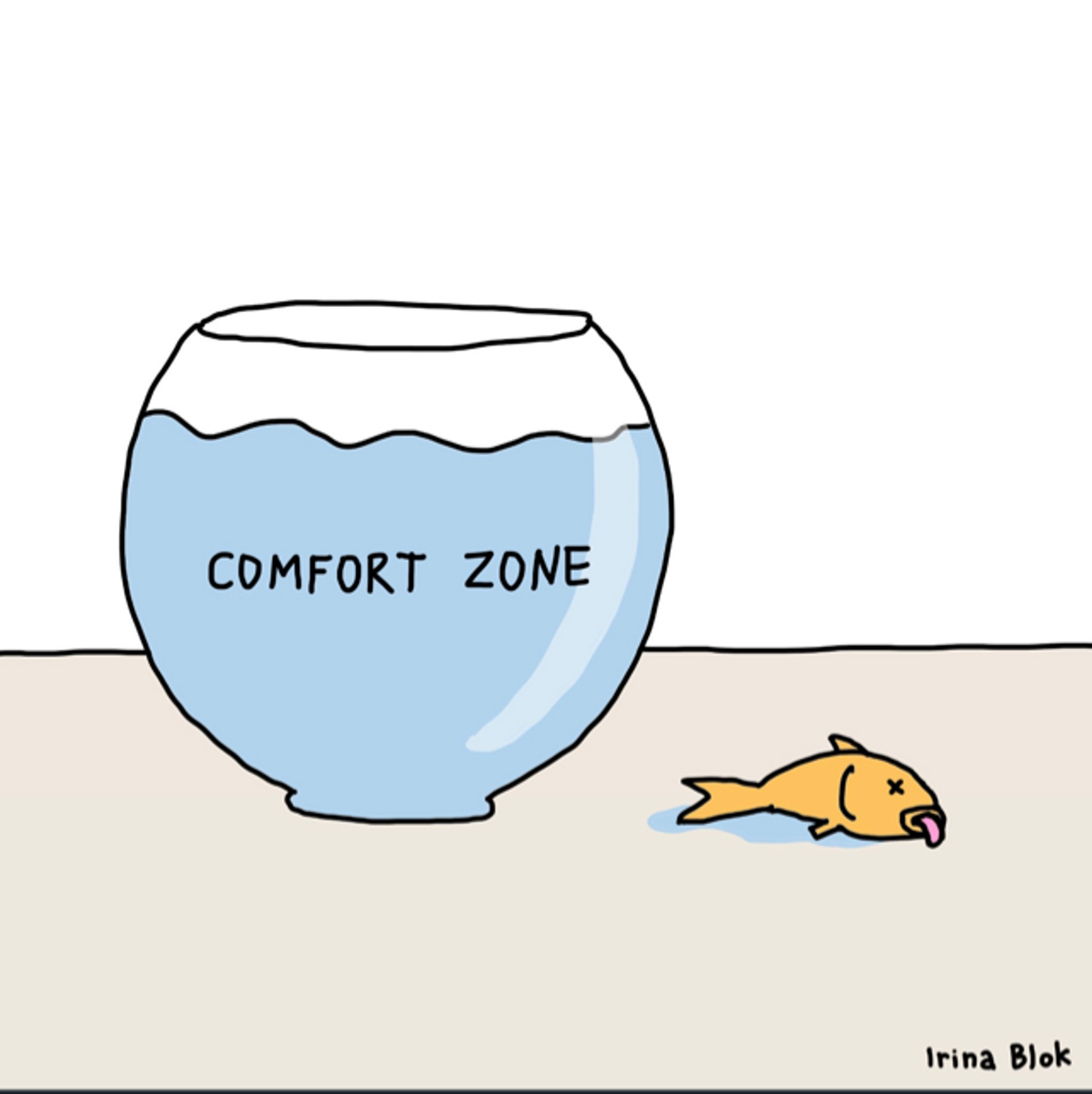
It’s been said before, but it bears repeating, you cannot grow within your comfort circle. Much of what needs to be done in the latter stages of language acquisition are incredibly difficult and rarely fun. However, seeing progress return makes all of the temporary suffering worthwhile. That means addressing your weaknesses.
Chances are, if you are working on your own, you have been spending a lot of time leaning into your strengths. If you are good at reading, you’ve probably spent a lot of time reading. If you like to write, you’ve probably written a lot. Don’t care if your entire day is filled with second language audio? You probably have an ear for the language.

But where there is strength, there is usually weakness. You must necessarily, then, identify your weaknesses and do anything and everything in your power to overcome those weaknesses. For help with those things, check out this article:
Avoidance isn't resolution

Welcome, aspiring polyglot! The other day I was working with a student and he told me the things he felt he was struggling with and we addressed them. After about 15 minutes I asked him how his writing was coming along. He told me he hadn’t been writing in the past couple of weeks so I asked him to write me some sentences. A few more minutes passed and …
None of it matters if you don’t track it, though. Without knowing where you were you cannot possibly appreciate where you now are. Track everything you do. Seek the smallest of wins. Celebrate the bigger wins. I highly recommend against using translation help when writing, too. Forcing yourself to work with what you have will make the progress far more clear moving forward.
Conclusion
Burnout can be caused by a myriad of things. One of those things is repetition. Yes, you need to get reps in order to learn a new language, but more important than repetition is iteration. Creating new and better ways to do the things you are already doing will ensure that the sky is your limit. But it is crucial that you switch things up from time to time to stay motivated.
Even the 1000+ day Duolingo streaks become meaningless when you have to take a look at the actual progression being made. Doing the same thing every day is great, but it will make your thought processes rigid where they need to be flexible. Constant adjustment and iteration is difficult, but you can do difficult things and be great. So get out and do some difficult things and become great.

Requests
If you have anything you would like covered you can reach out to me on X, Instagram, or at odin@secondlanguagestrategies.com.
Additional Resources
Don’t want to spend time playing catch up? Pick up the 3 Months to Conversational book now available on Amazon! 3 Months to Conversational
For more long form content be sure to check out the website and the FREE Language Learning PDFs we have available!
Subscribe for new content on YouTube and TikTok!
Learning Spanish? We have begun aggregating resources in you Spanish Resource Newsletter!
Don’t forget to pick up your very own French Language Logbook or Spanish Language Logbook