

Welcome, aspiring polyglot! Sometimes in life things happen slowly, then suddenly. Gaining and losing weight, making and losing money, and learning or losing a second language. Unfortunately, even knowing this going in is not enough to prevent one from feeling hopeless during each plateau. Until you’ve actually felt the flip switch, at which point things get really exciting.
Early signs of success
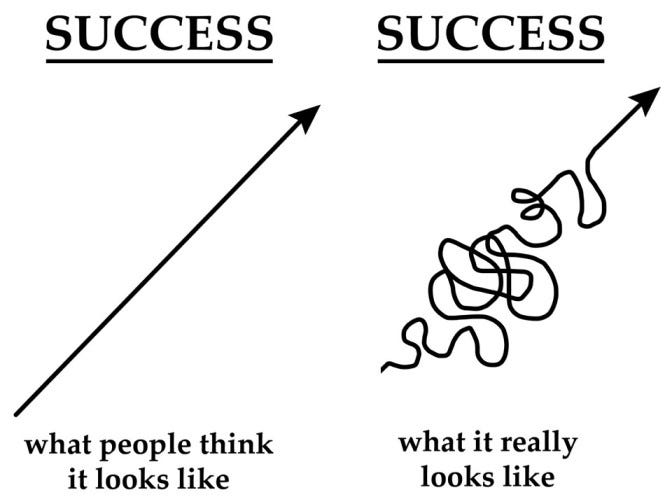
While there are no guarantees, one of the early signs of success that I have seen in people who do flip this proverbial switch is that they are consistently working every aspect of foreign language acquisition. They are reading and writing and speaking and listening every day. For more on hitting all of the components in your own daily life, read this:
What are the 5 Components of Second Language Acquisition?

Understanding Second Language Strategies for Homeschool Families
They also take me seriously when I talk about building an immersive environment. Of course it is easier to just live somewhere where you are immersed in your target language, but that is not an option for everyone. For those who do not have such an option, choosing to fill their time and space with their target language is the next best option.
Even if it starts out as only one change, if you make one change every week for a year your life will look unrecognizable to what it was. For help on building yourself an immersive environment at home, check out this article:
Building a Bilingual Environment

Welcome, aspiring polyglot! Trying to get people to immerse themselves in their target language has been easier than I expected. At first it may seem like quite the big ask, but in reality it only takes one or two changes every week. After a month or two, most of your free time will be filled with input from your target language. Especially if you can m…
The biggest thing, however, that you can do to put yourself in the optimal position is create at least as much as you are consuming. Most people neglect this because they believe speech is something that stands on its own. This couldn’t be further from the truth. Speech depends on a variety of factors not the least of which is the ability to understand the person with whom you are speaking.
Writing is probably the single best way to train speaking abilities aside from attempting to hold actual conversations. The same recall mechanisms are at work with none of the pressure. Do it often enough and you will realize that the words you write consistently are easier to recall during conversation. That one realization should, in turn, convince you of how important writing is.
In the thick of it
Once you are in the thick of it, all of the writing you did early on will come back to pay dividends. Seeing your early work is much more powerful than trying to remember mistakes you may or may not have made during a given conversation. In fact, sometimes when you are struggling to come up with things to write, going back over old conversations is perfect for advancement.

Keeping a record of your progress is something far too few people do. Not only with regards to language acquisition. If you truly want to improve a skill, you need to start by tracking where you are and decide where you want to go from there. For those who are struggling to set realistic language learning goals, be sure to follow these steps:

Avoiding burnout is your next challenge as someone who wants to make it through to the other side. Monotony is dangerous and if you are already bored before you even sit down to begin studying, it is going to be incredibly difficult to continue as time progresses. By having a variety of materials you can work through that cover every interest you have, you give yourself the best chance of making it through to fluency.
A little talked about trick that I use with all of my students is that of a rest week. Just one week where we completely stop talking about the target language. That is not to say that they avoid the language, I work with a great many people who are immersed in their target language. Rather they stop their dedicated study time for one week to allow the material we have covered time to sink in.
Coming out on the other side
Normally, the first blip of success happens on the other side of one of these rest weeks. Which we normally take at the end of week 8 of class, for those who are curious. Today, in fact, I had a student recount to me that he was able to understand directions clearly from a fitness instructor for the first time in 4 months. That’s an incredibly exciting development, but only the first step.
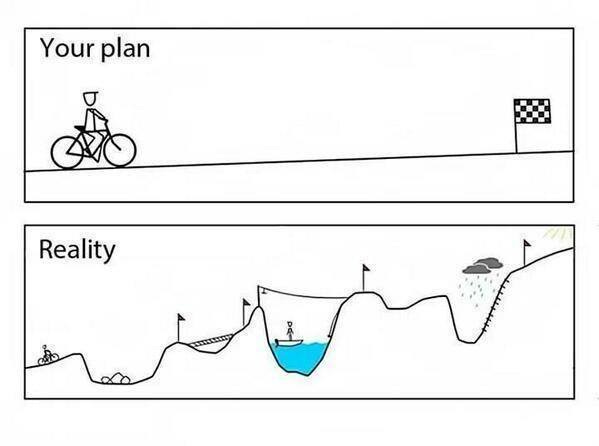
All of these are small wins you need to be looking out for in your own daily life. Are you able to understand a little bit more of the song you love? Is the show you are watching making more sense, even if it’s only one of the actors? Have you found yourself wondering how you might say different things in your target language? These are all wins that you should be checking off of your list as you go.
These precursors lead to eventually going form thinking about objects to thinking about conversations to thinking about ideas all in your target language without any interference from your native language. Slowly, then suddenly, you will go from looking at a window and thinking “ventana” to looking out the window and day dreaming in your target language.

The final indication that you are through to the other side is that you are no longer translating in your head before you speak. This one is the one that sneaks up on you. One day you will wake up and step outside, go up to someone and strike up a conversation, and only hours later will you realize that you didn’t spend any mental bandwidth translating during that conversation.
Conclusion
Unfortunately, the worst part of all of this is that it is impossible to understand unless you have experienced it before. Sure, you can use the analogous experiences to approximate the feeling, but there is no replacement for experience. I want everyone reading this to understand exactly what I mean and I am fortunate to have had the honor of seeing so many people experience it thus far.
I can’t say it is easy, but it is simple. Do these things every day for 21 days and you will be shocked at just how far you will go. Of course, 3 weeks is nowhere near enough time for you to start speaking a new language, but it certainly long enough for you to make undeniable progress. I look forward to hearing stories of your triumphs. I am rooting for you.

Eager for more resources?
Everything in this post is part of a larger system. If you want the full methodology in one place, 3 Months to Conversational is available now on Amazon. It’s the same framework my private students use, designed for independent learners.
If you want that framework customized to your target language, your goals, and your schedule. Check out the private course options.