

Welcome, aspiring polyglot! Listening is one of the skills many people assume will improve over time with or without a concerted effort. Unfortunately, this is not true. In order to elevate your listening skills you need to do more than simply have your target language playing somewhere in the background. Of course, if you do spend more time immersed in your language of choice, it will make things easier over time. However, if all you do is play things in the background you will struggle to understand native speakers when the time comes.
No one wants to feel like the work they put in was all for nought, and I don’t want you to feel that way either. Luckily there are some exercises you can begin working on immediately that will ensure you are able to flex your listening skills whenever necessary. Some are easier than others, but as with everything you should try them all out and find out what works best for you.
The dangers of passive listening
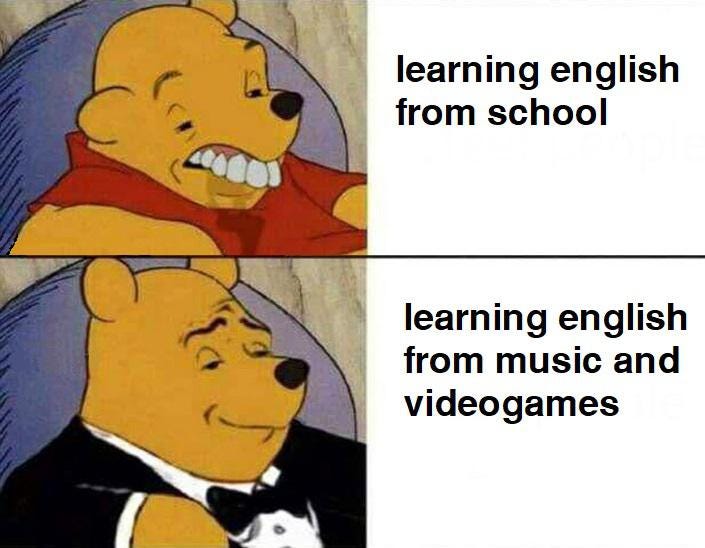
An easy trap to fall into is the “well, I’m listening to music all day, that should be enough,” trap. When you spend hours upon hours listening to music in your target language it might feel like you are working, but you really aren’t. This is self evident when you travel as many foreigners know the sounds of different songs without knowing the words in the songs. If you are actually going to spend time looking for and listening to music in your target language, pay attention to the actual words being said/sung and try to understand the meaning.
The first time you try this it will likely be demoralizing. After all, you have heard the song multiple times, certainly you know at least some of the words, right? Realizing that you don’t quite know as much as you thought you did is never fun, but translating the music you listen to is almost always enjoyable. It is far too easy to fall into the habit of hearing things without listening to them, you must fight this every step of your language acquisition if you want to be successful.

Another issue people run into when they are hearing instead of listening is understanding individual words rather than entire sentences. More often than not, the sentences will change based on the order of words and it is exceedingly rare that one word works independent of the rest of the sentence. When you focus on one word at a time you do yourself a disservice in that you rob yourself of the chance to understand the meaning of the phrase, sentence, stanza, or chorus.
All of this will inevitably delay your progress which can create a negative feedback loop that is difficult to escape. If that sounds like something you have been struggling with, hopefully this will act as a lifeline to you. Getting more exposure to your target language is almost always a plus, but you cannot simply be exposed to the language. Active listening is a skill, but it is one that is best honed using comprehensible input. You can also practice in your native language simply to develop the skill. Try putting on a song you think you know all the lyrics to and see if you are actually as good as you think you are.

Making the most of your time
Your time is finite and therefore it is priceless. If you are going to spend time working on your target language there is no reason to do it haphazardly. The best way to make the most of your time listening to your target language is by actively participating. That means sitting down and writing out the things you are hearing. It means listening to questions from native speakers and formulating hypothetical answers to those questions.
Growing your content pool is vital because the last thing you need is to learn one person’s voice. Once you have learned to understand one person well, it is tempting to always return to that person as it will inherently boost your confidence. However, when it comes time to speak to or listen to someone else, you might find that you are completely lost. Diversifying your input pool will all but eliminate this problem.

Overall the goal is, yes, to increase your exposure time to your target language, but it is also to spend more of that time actively engaged with your target language. Passively listening to your language of choice is great, but you need to spend more time actively working with the language than you spend passively hearing or seeing it. When you are sitting there wondering how you can make this happen, there is one simple answer, language learning apps.
Using mobile apps for supplementation
I have made no secret of the fact that I don’t think language apps are good in a vacuum. However, that does not mean they are not useful. If you are choosing to hop onto a language app like Glossika instead of scrolling TikTok or Instagram, that is infinitely better for your language learning progress. As tempting as social media is, language learning apps offer just as much stimulus while simultaneously helping you progress in your language acquisition.
The best way to think about language learning apps is as supplementation. They act as a way to enhance your language acquisition with on demand, active exercises that are increasingly more engaging which will allow you to dive into your target language without having to prep your own material. When used in conjunction with other materials they are almost invaluable in their ability to offer you new and easy to consume content that often connects the dots for you.

There is an app for just about anything, but when it comes to listening, Glossika is amongst the best. Hearing native speakers, talking at a natural pace, using words and phrases they use in their every day life, will allow you to excel when it comes time to actually hold a conversation. It is difficult enough to think of what you need to say. Having to think about what to say while simultaneously translating word for word the things you are hearing is often overwhelming.
Mastering the ability to understand what any native speaker says at any time means you can pour all of your energy into the most intimidating part of learning a new language: speaking. Apps like Glossika are advantageous in speaking as well since you have all but limitless examples of native speech at your fingertips. Simply repeat after the speaker, mimicking the tone, cadence, and fluidity as closely as possible. Do this every day for 90 days and you will be shocked at how much you progress.
Conclusion
Listening is a skill most people assume they will simply develop passively over time as they spend more and more time exposed to their target language. While that would be nice, it is rarely the case. In order to truly hone your ear you need to spend time actively listening. Whether you choose to listen to music, podcasts, TV shows, YouTube videos, or anything else is irrelevant. All that matters is that you sit down and actively practice your listening skills multiple times per week.

The first few times you do this may seem a little weird, but with a bit of practice you will find your groove. In the moments when you don’t know what to do or where to start, firing up a language learning app is the perfect solution. Make sure you are intentional with your practice on the app and find ways to bring other forms of stimulus to the table so you aren’t relying solely on the app for your language acquisition. It will be difficult, but you can do difficult things and become great. So go out and do difficult things and become great.
Eager for more Second Language Strategies?
Exams reward a specific kind of preparation that most self-study methods don’t provide. Paid subscribers get access to exam-focused strategies and frameworks in the Guides library designed to complement what you learned in this post.
Need to hit a score by a specific date? I build exam-specific private courses with targeted preparation for TOEFL, CLEP, DELE, DELF, and more. One of my students passed his TOEFL and got accepted to a New York university after working together for three months. Read his story and others here.