

Welcome, aspiring polyglot! One hurdle every single person who is learning a new language will face at one point or another is trying, and failing, to express something they know they know how to say. What I mean by that is, we often get used to expressing different things in the same ways and it is sometimes simply not possible to do that in your target language. You may find that the words you use do not mean the same thing when translated which can cause instant analysis paralysis.
Fortunately, there are things you can begin doing today to combat this feeling and set yourself up for successful language acquisition. In short, you need to diversify your vocabulary. I have harped since day one on the importance of having a vast vocabulary. Never is the purpose more clear than when you realize you can use less common or even unconventional ways to express yourself in your target language. After a few repetitions, you will realize you can, in fact, say just about anything. It just might not be the way you envisioned it.
Another way to say things
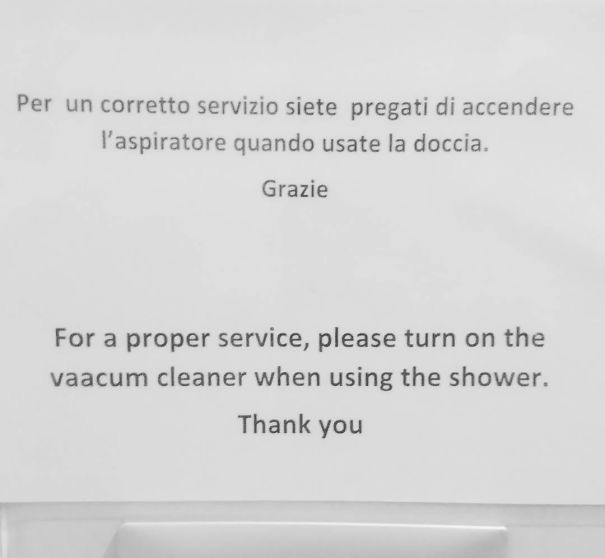
It is vital that you remember there are several ways to express the same things. Once you are able to think of multiple approaches in English, or your native language, you will be able to expand into your target language. One of the people I work with recently said it in a really great way and I think it will be beneficial for you all to read. She said, “I realized as I was listening to the music that I shouldn’t be translating the words, I should be translating the meaning.”
I can’t think of a much better way to word it. That is, for all intents and purposes, learning to think in the target language which is the ultimate goal. This is where having a large vocabulary will be reflected in your speech or your writing. Of course, it is possible to make it with fewer words, but it’s a whole lot more difficult. Let’s look at some examples.
Think about the English word “get” and think about how you might translate it into your target language. Now, think about how you might translate the following sentences:
You don’t have to explain, I get it.
He get’s in trouble quite often.
She gets twenty dollars per hour.
Can you go get him from the airport?
I had to get up early morning.
We have to get to bed early tonight.
They need to get going.
Just there you will quickly notice that, even though the word “get” is in every sentence, you cannot use the direct translation in most cases. I’ve written before about how direct translation can help you, but this is one of the instances where it will hinder you greatly. Direct translation is helpful until it isn’t and it is well worth your time to train yourself to escape it as quickly as you trained yourself to enter it.

Let’s look at another example to really drive the point home. Think of the word “for” and all of the ways it is used in English. Now, imagine how many ways it might need to be translated to cover all those bases. Translate these sentences for practice:
You have been working for eight hours.
For as long as I can remember he drank soda.
I am for freedom of speech.
Who did you make that for?
She was known worldwide for her beauty.
In these two example words from English we have the meanings, receive, retrieve, go, start, rise, coming from “get” and during, in favor of, and because of coming from the word “for”. With that in mind, these sentences should give you a great jumpstart on learning to diversify your vocabulary pool to match the situations you find yourself in, but there is always more to it. One of the best things you can do to supplement is start reading books that are way above your purported language “level”. That’s not all, though.

Sometimes it comes down to giving up on what your ideal expression might be and using what you know. You will always have the opportunity to continue expanding what you know. However, that does not mean you will be able to say anything you want straight from the beginning. It is going to take time to build up and, during that build up phase, you must use what you know rather than trying to insert words and phrases you don’t know for sure. Don’t be afraid to try new things, but if they don’t work, make sure you have a back up plan.
Take time to think
Another technique that will change the way you approach your target language is learning to take your time and truly think through your sentences. So often we want to jump in and contribute to a conversation only to realize half way through our sentence that we don’t know where it’s going. This is amplified in your second or third language and can result in some awkward silences which can be slightly demoralizing.

All you have to do to avoid this is slow down. Now, this is easier said than done because you will be fighting against every single instinct you have. When you are finally able to train yourself to slow down, you will realize that you are able to speak fluidly and confidently, even if it takes a few seconds longer; and yes, while it may feel like an hour, it is only a few seconds longer that you need to slow down.
Taking your time and thinking all the way through a sentence will ensure you don’t fall into the direct translation trap above. When you know you are using “get” for receive you can use the verb for receive instead of whatever get might be in your target language. If you realize after going through the entire sentence that “let” means “allow” in the context of the sentence, you can think of synonyms for “allow” in your target language and go with those since “let” likely won’t translate to “allow” in your target language in the given context.
This same strategy is useful for reading, writing, and translating as well. It is more than likely that you have experienced confusion when reading your target language because you were going word by word. Many words rely on words before or after them in sentence order to be defined properly. If you don’t take the time to read all the way through the sentence and get the full meaning, you may find yourself with a complete mess of a translation that makes no sense to anyone.

Slowing down is by far one of the most simple yet most difficult aspects of language acquisition. It is easy to try and speed up, obscure the mistakes you are making by mumbling your words, but easy does not serve you. By choosing to always take the easy road you are essentially setting yourself for indefinite study time. The way we approach things may be difficult, it might feel intense, but it is effective.
I want you speaking, even if it’s only 80% correct and limited by insufficient vocabulary because once you start speaking the sky is the limit. I spoke broken Spanish for 3 months until it finally clicked for me. I spoke broken French for 7 months until it finally clicked for me. I still speak broken English and it’s my native language! Fortunately, broken language is something that can be fixed with time and effort alone.
Conclusion
If I’ve said it once I’ve said it a thousand times, but still it is worth repeating, there are many ways to say the same things. Your challenge learning a new language is going to be first learning all of the ways to express things in your native language. Only then will you be able to transfer the skill to your target language with great efficacy. Reading is a great way to train this skill, but there is one better.
Translating English to your target language (or your native language to your target language) will always be the most effective training method. You want to speak this language after all, right? So what better method to learn how than by doing exactly what is required of you in order to speak a new language: translating. I don’t mean direct translation, either. The translation I’m talking about requires taking into consideration the meaning of the words as a whole, not their definitions independent of one another.

As we discuss often around here, creating is vital in second language acquisition. Speaking and practicing with written language will help you in accelerating and enhancing your language learning process, so start having conversations as early on as possible. It will be difficult, but you can do difficult things and be great. So go do some difficult things and become great.
Eager for more Second Language Strategies?
If you work in healthcare, I’ve built Medical Spanish and French Handbooks with dozens of clinical patterns and vocabulary frameworks you won’t find anywhere else. Available to paid subscribers.
I also build custom courses for professionals. Doctors, nurses, engineers, and anyone who needs targeted language skills for their field. Every program is tailored to your specialty, your patient population, and your schedule. Learn more and get started.