

Welcome, aspiring polyglot! An interesting quirk of teaching foreign languages in the age of AI is that you start to realize humans often hallucinate as often as AI does. Which makes sense. After all, humans did create AI. What that means for you, though, is that you now have to be wary of not one, but two forms of hallucination from two entirely different entities.
It’s natural

The vast majority of people I know are working with AI in some capacity to learn their target language. Even if they don’t know it. Duolingo is reliant on AI and I am all but certain every other available app is as well. This is not inherently a bad thing. Like any tool, AI can be used positively or negatively. The biggest problem is that most people don’t know enough to know what they don’t know.
This is why it happens to people, too. When there is a missing piece of the puzzle or a lack of understanding somewhere, it shows up the most in repetition or recitation of the material. In fact, it happens so often that I often find it borderline comical. Especially given the fact that the hallucinations, at least on the human side, rarely are enough to cause major issues.
On the bright side, since everyone does it all you need to do is learn how to recognize it in yourself. Often this means taking your time. There is a desire among most people to speak quickly when they speak. Some only raise the tempo of their speech, others will also lower the volume. Occasionally it will deteriorate all the way to mere mumbling.

Taking a deep breath and remembering that you are not in a hurry during your study sessions or in class will solve 50% of the problem. As they say, slow is smooth and smooth is fast. However, that in and of itself is generally not enough. You next challenge is to review the material with a closer eye. You would not believe how often you are adding modifiers to your language.
Most of the time you do this is because it makes sense. Adding in a “very” or a “more” or a “most” is extremely common. Especially in a language like Spanish where those words are all very similar. My favorite thing to do in a time like that is stop my student and ask, “why did you say x”? That is more than enough for them to take stock of what happened and begin calibrating.
Trust but verify
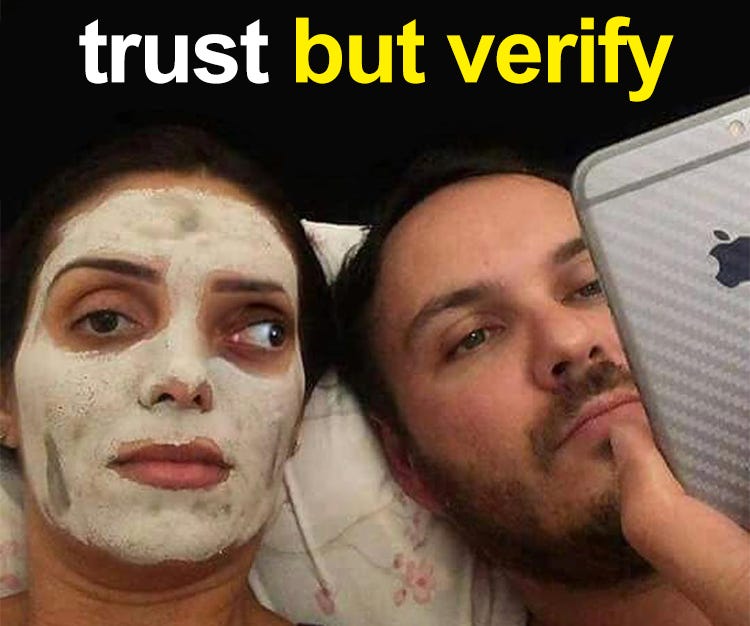
Understanding a problem is the first step to fixing the problem. In your case you have a verification problem. So, how do you stop making a mistake that literally everyone makes? There are three ways:
Write down everything and look for your mistakes
Do NOT use help when you do this
Record yourself speaking
Do this once per week to make sure you are getting the most of the exercise and are consistently improving
Hire a coach
No one is going to hear your mistakes better than someone else. If you have a friend or native speakers in general with whom you can practice, that is fantastic, but if not it is worth hiring someone to help you improve faster.
If you are more focused on correcting and checking yourself, you are going to have to be simultaneously more confident and more harsh with yourself. This is a difficult balance to strike, but it can be done. One of the best indicators of a successful language learner is that they master the task of self correction. For more on that, read this:
Check Yourself Before You Wreck Yourself

Welcome, aspiring polyglot! A leading indicator that you are well on your way to fluency in your target language is the ability to self correct. Making mistakes is part of the game, by now that should be clear, but that does not mean making the same mistake is part of the game. It should be your goal to stop making whichever mistakes you are making as q…
Another area that you can improve is through testing and improving your native language skills so that you can recognize grammar mistakes as well as vocabulary mistakes. Mastery of your native language is the natural progression to mastery of your target language. When you don’t understand the grammar structures of your native language, you will end up messing them up in your target language through faulty syntax.
Don’t just test yourself in your target language. Holding yourself to a higher standard in every language you speak will have ripple effects across all of the subsequent languages you learn and speak. A larger vocabulary, a better understanding of complex grammar structures, and an understanding of how to write will set you apart from other language learners in all the best ways.
Ask yourself why

The final course of action is to start asking yourself why. This is a pretty useful life hack if you are willing to run the experiment. Asking yourself why you do things is something the vast majority of people never do. Most people don’t even know why they think what they think or believe what they believe. Trying to get down to the real reason you are “hallucinating” words is difficult, but revealing.
There will also be times where the word in your native language resembles the word in your target language, even if it is a false friend that leads you to a false sense of security. The word “actual” in romance languages is notorious for this because it actually (lol) translates to “current” meaning “actually” in Spanish, French, Italian, etc, means “currently” not actually.
False friends are some of the most brutal tricksters in any foreign language. Especially as you begin to get more confident. In Spanish this happens with the past participle descriptions. For example, accelerado means accelerated, dividido means divided, so, naturally, embarazada means embarrassed, right? Wrong. It means pregnant. Beware of false friends.
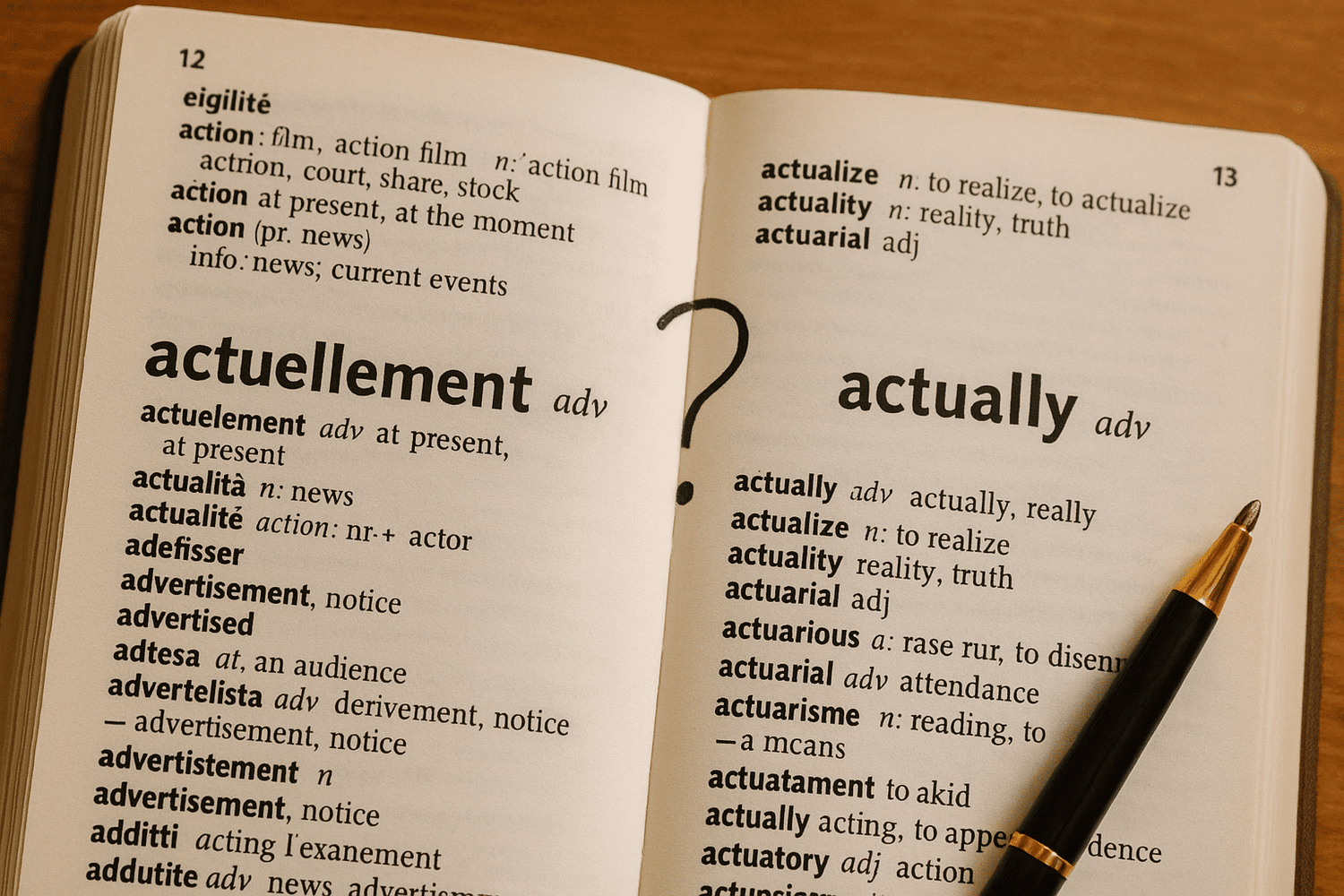
Sometimes it is as simple as the fact that the words look similar in your target language and are used in similar ways (muy vs mucho in my classes is VERY common). Other times it has more to do with the fact that you are simply moving to fast and inserting vocabulary you would normally use in a given circumstance rather than what is actually being said.
Conclusion
While the AI hallucination epidemic is likely going to get worse before it gets better, if it ever gets better, your hallucinations can be remedied. Part of the problem is that it requires judging yourself harshly without becoming demotivated. That is probably the main reason to hire someone to help you along the way. It doesn’t hurt as bad when deferring to an authority.
That said, I highly encourage you to take some time and work through the other options first. See how far you can take things on your own. Having a teacher/tutor/coach will always save you time, but you deserve to see what you can do before taking that leap. That data will help your teacher, too. It is difficult, but you can do difficult things and be great so go out and do some difficult things and become great. I am rooting for you.

If this post made you rethink your approach, the next step is replacing what isn’t working. My free downloadable PDFs give you exercises and frameworks that no app provides. Real output practice designed to get you speaking, not just tapping.
Want to skip the trial-and-error entirely? My private students go from zero to conversational in 12 weeks with a course built around their goals, their schedule, and their life. See what that looks like.