

Welcome, aspiring polyglot! In class the other day, one of my students told me that he enjoys reading my articles because he can hear my voice in them. At first I wasn’t entirely sure what he meant, but then I realized I do tend to write the same way that I speak. One of the reasons I am always telling you to write actually has nothing to do with learning a new language.
Voice
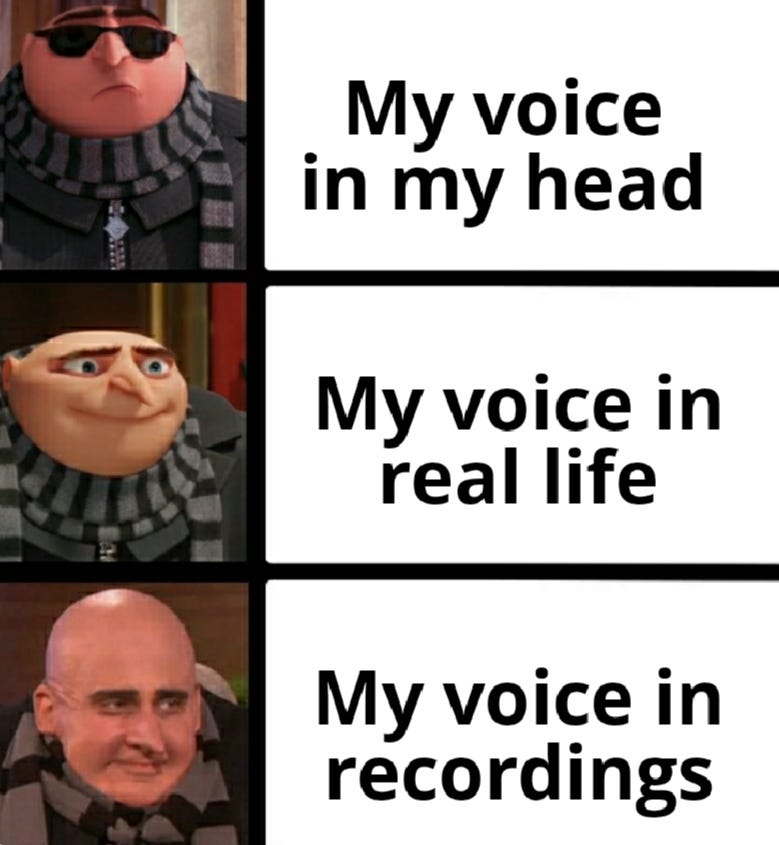
Most people probably think I push writing so hard because it is the best way to make the neural pathways you are developing more efficient. That may be true, but that is only part of the equation. The real reason I am always pushing people to write has almost nothing to do with language acquisition. Well, at least not foreign language acquisition.
In reality, the best way to train yourself to think is by writing. Thinking, after all, is merely a conversation with oneself. Personally, I find it incredibly difficult to keep that entire conversation straight in my head; and I know I am not alone. At the end of the day, I want you to be the best thinker you possibly can be. That will make not only language acquisition easier permanently, it will have positive effects throughout various areas of your life.
By doing this work, you will also find your voice, if you have not already. Unfortunately, this is much easier said than done. The vast majority of people do not think before they speak. Their voice is a reflex, not a deliberate decision. While the average day in the average life does not necessitate a strong personal voice, we are not chasing the average day in the average life.

With the mass adoption of AI, finding your voice is more important than ever because it is the one dead giveaway that you are human. Robots will always sound robotic (I know, genius, right?). This is one of the main reasons I warn against relying on AI for language acquisition. If you are curious about that, you can read more here:
Does AI Work for Learning a New Language?

Welcome, aspiring polyglot! Recently the idea that AI is going to replace the need for learning a second language has come up more frequently. Why this is, I will never understand. To put it frankly, if you are learning a new language to talk to people, AI cannot replace the skill. Speaking through a robot will never be as authentic as speaking yourself…
Authenticity, humanity, are going to become ever more valuable as they grow ever more scarce. Writing, in any language, is a sure fired way to guarantee your voice remains authentic, despite the exploding synthetic nature of the world developing around you. It will also help you maintain your ability to spot slop when you see it, which is going to become an important skill in the coming years.
Being able to spot slop (if you don’t know the term, it essentially means mass produced AI nonsense. “Made in China” stuff, but digital), is already becoming more difficult. Training your ability to detect it now is optimal. Help your parents, too. The fewer people out there consuming AI slop the better. Beyond the slop, though, learning to use your voice will help you recognize the voices of those around you.
Interpreting others
Your voice is more than just the words you say and the order in which you say them. It encompasses how you say things. That includes sarcasm, excitement, exhaustion, enthusiasm, jokes, and more. By learning how to use these things, you will begin to understand it when others are using it. That is yet another reason that production is so valuable in your day to day language study sessions.

But production without purpose is not going to be the best way to spend your time. Ultimately, you need to be storytelling as much as possible. The whole purpose of learning a new language is to share stories, your stories, with new people in a new place using a new language. If you are writing stories ahead of time, you gain the benefit of telling them for a second time when you meet a native speaker.
Unfortunately, this means going back and editing your stories is going to be the best way to perfect them in so much as that is possible. I am guilty of this. In fact, it is probably my biggest area of opportunity. If you have been reading for a while, it is almost certain that you have seen a typo or two. This is because after I write these articles, I rarely go back and edit them.

So, in this case, I am preaching to me as much as I am preaching to you. Write your stories, but do not stop there. That is only the first step. Every time I ~do~ actually edit things I have previously written, I almost always find something that can be improved. This is even more true when it comes to writing things in a foreign language. For more on iteration read this:
Relying on Your Memory for Second Language Acquisition

Welcome, aspiring polyglot! Recently I was charged with recounting a story. Most of it had to do with how I learned French and how my language acquisition methodology came to be. As I was telling this story, part of me began thinking of how I would tell it in French. After all, most of those experiences took place when French was the only option.
Practice emoting, explaining things in great detail, fighting for every descriptive word to truly express things exactly how you want to express them. You have to start somewhere, sure, but you do not, and certainly should not, stay there. Iteration is going to be your bread and butter here. Take what you have and keep trying to make it better every chance you get.
Forging your own
Let’s say you don’t know where to start. Here are the things you need to do to start forging, or finding as it were, your voice. Here is a step by step of things to do next week:
Start writing down your own thoughts
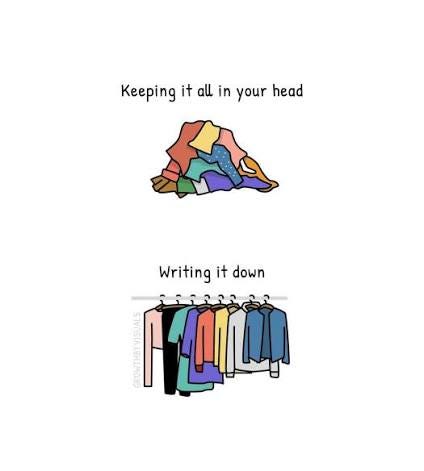
Do this as often as possible. Of course you can’t always do it, but there is no more authentic you than your own thoughts. So you should take time to write them down, but you also should use this exercise to sharpen your thoughts. Test them, trial them, hone them. Learning to be a better thinker will make you a better learner.
Talk to yourself
The amount of time I spend throughout the day talking to myself under my breath is embarrassing to admit. However, it is also one of the things I enjoy about the day to day life. I like that I can find good conversation with myself, even if it makes me seem somewhat schizophrenic to my wife. And depending where you are, conversation with yourself might be the best available option.
Narrate your life
Okay, so you don’t want to talk to yourself because you are not a weirdo like me. Fine. I get it. If that is the case, the next best thing you can do is narrate your day. Treat yourself like you are in a movie and talk about the things you are doing. Talk about the things you want to do. The things you did do. How it felt while you did those things. What you might change about the process. For step by step, read this:
Speaking a New Language in Your Head

Welcome, aspiring polyglot! Many people have asked me how they can get more speech practice into their daily life. What matters most, though, is production. By working on your language production, which does include speaking, you are making it easier for you to recall different vocabulary words and grammar structures when it matters. But, how can you ad…
While I don’t think this needs to be said, I will say it anyway: you should be doing all of these things in your target language. Sure, there will be some benefit to doing it in your native language. In fact, if you are struggling to do it in your target language, doing it first in your native language might bridge the gap. Either way, what matters most is that you start immediately.
Conclusion
There it is. My true motive behind trying for so many years (and so many more to come) to indoctrinate you all into write more, creating more, thinking more, and being more. Learning a new language is amazing. Becoming fluent is one of the greatest feelings on Earth. But it is all secondary to the ultimate benefit of emotional and linguistic integration that is possible.
Of course it is difficult. As is often said, if it were easy, everyone would do it. Right now far more people are becoming parrots for ChatGPT, Claude, or whatever AI you prefer to insert here. Fade the masses. Find your authentic voice. Expand it across every language you know and every language you learn. That is how you guarantee yourself the best, or at least the most fulfilling, experience.

If this post made you rethink your approach, the next step is replacing what isn’t working. My free downloadable PDFs give you exercises and frameworks that no app provides. Real output practice designed to get you speaking, not just tapping.
Want to skip the trial-and-error entirely? My private students go from zero to conversational in 12 weeks with a course built around their goals, their schedule, and their life. See what that looks like.
“Authenticity, humanity, are going to become ever more valuable as they grow ever more scarce.” I absolutely agree with this. I love the tips you provided for learning a new language. I’m learning Spanish and Mandarin. I’m going to try to narrate some things in each language. Thank you!