

Welcome, aspiring polyglot! I go back and forth with my students about this a lot. Largely because I am opposed to flashcards outright, but I also don’t believe that everything that works for me is everything that will work for everyone. If flashcards are helpful to you, then there is no reason to avoid them. The same goes for textbooks. I might loathe them, but if they work for you, use them.

What do these mean?
A warning, though, with regards to flashcards. The principle reason for which I oppose their use in language acquisition (important to mention, I am anti-flashcard in the context of language acquisition only) is that language is fluid. That is to say, unlike an anatomy test where there is precisely one correct answer to a given question, in language there are always multiple correct answers.
Let’s go through some examples to demonstrate the point. Let’s say you are planning to make flashcards. You go for high volume words, as you ought, and you wind up at the word get. What goes on the reverse side of that flashcard? Really think about it for a moment. Do you have your answer written down? Surely you said, “receive”, right?
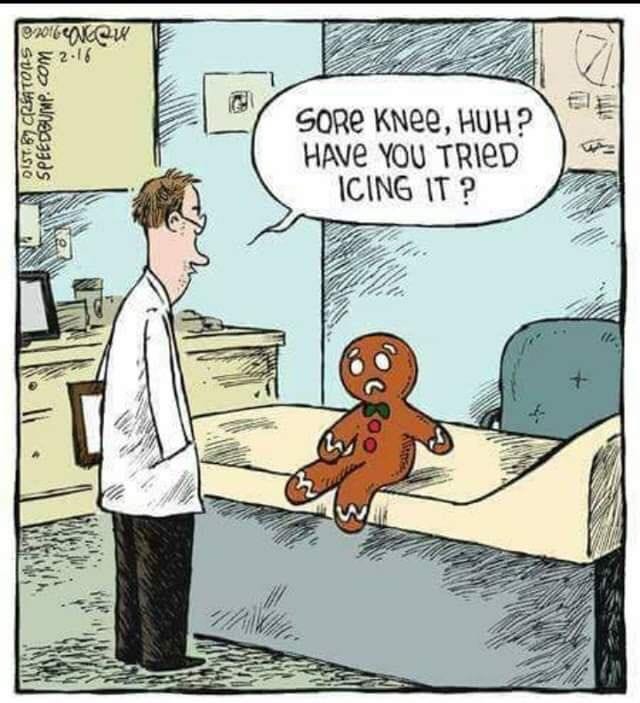
I get it if you didn’t.
You have to get over your preconceived notions.
Getting ready to learn a new language necessitates that, at the very least.
But if you want to get a new job with this new language, you’ll have to get up, get yourself together, and get on the road.
After all, when the going gets tough, the tough get going. And forget the words that get begets! It’s getting to the point where I don’t even get what I’m trying to do anymore.
Were you correct? When you decided what belonged on the reverse side of your “get” flashcard?
What about set? In your setup how would you set up the word set? Would you include the sunset? What about the TV set? A little unsettling, but don’t get upset! We have to prepare for the next set. It’s already preset in our program and we don’t have time to reset the plan. That said, there is always time to set the table. It’s never set in stone. That alone should set you free.
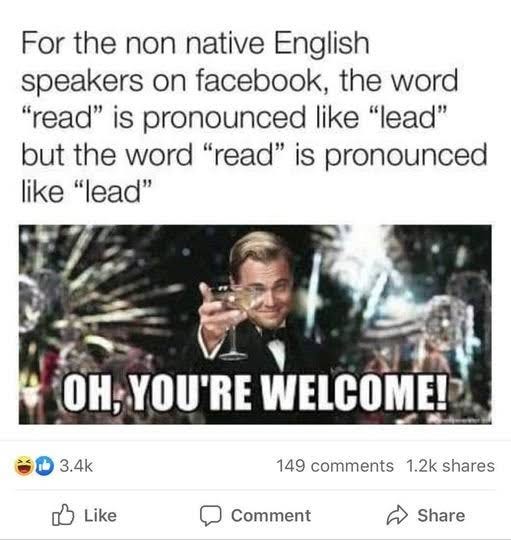
I could go on, but I hope I’ve made my point. If not, perhaps that is something with which you should challenge yourself as well. Find a few high volume words (they are high volume for a reason) and think of how many different ways you could use the same words to mean different things. I talk a lot about using different words to say the same things, but can you do the inverse?
Multiple meanings
There are going to be times, especially if you spend time around people who speak foreign languages, when you are asked what certain expressions mean. It is therefore worth asking yourself whether or not you know if you are able to explain what the expressions you use in your every day life actually mean. Until I was forced to think about it, I never really knew how to explain them either.

Go through them in your head. Chances are there are some you use every single day, if not every week, and when you go to translate them into your target language they will make no sense. Here are a few, just for example:
To run out
To hang out
To meet up
To shoot the shit
To give up
All of these things, and these are few of the many, hold direct meanings that can be translated, but if you try to translate the words themselves, it will not make sense to your interlocutor. In the same vein, it is worth your time to learn the expressions used in your target language. Chances are they have something that is near or identical to the ones you are using in your daily life anyway.
The benefit of this is, of course, that you will be able to express yourself in a more natural way while simultaneously having a better understanding of the culture and people who speak your target language natively. Beyond that, though, it will force you to think more laterally, to reach for words that ~could~ work, even if it isn’t a guarantee.
Ironically, one of the steps towards fluency is beginning to guess at words. Not blindly, that comes at the beginning. Once you reach B1/B2 level, however, you should be guessing at words with ~70%+ accuracy. Especially if you are working on a Romance or Germanic language. This is why your vocabulary in your native language is so important. For more on that, read this:
You Can Do Better in Your Native Language

Welcome, aspiring polyglot! Something many people fail to recognize until several months or even years into their second language acquisition is that their success is tied to their proficiency in their native language. At one point or another the realization is made, but if you approach your language acquisition intentionally from the jump you will save…
Ultimately, all of this is to prevent you from boxing yourself into a certain way of thinking. Just because you always express a certain idea the same way does not mean others express that idea in the same way. In fact, through doing this you may discover an even better, more complete way of expressing yourself that you hadn’t thought about before now.
Boxing yourself in
I try to make this clear to my students early on, but it is one of those things that doesn’t make sense until it makes sense. It’s one thing to cognize a fact, it is a wholly different thing to know and understand that fact. Sometimes I’ll get the comment, “Well, I never use that word in English anyway” as if that matters. It truly could not be less relevant.
You do not get to choose what other people say to you. Nor do you have any control over the history of your target language that led to certain word choices becoming more prevalent than others. How you would do things and how the people with whom you wish to communicate do things are rarely going to be the same thing; and they don’t have to change anything to communicate perfectly.
If you rely on static meanings or hold definitions as strict rules, you are going to be continuously disappointed throughout the language acquisition process. Language evolves despite our best efforts. That means archaic language will not always mean what it once did. We can see this clearly in written English, but the same process exists in every language.
I understand the desire to hold onto a definition as a rock in the storm, but for better or worse none of those definitions are indefinitely tied down. You will have moments where you realize that you said something horribly offensive (or just incorrect) and that is part of learning through the evolution of language. The more mentally agile you are, the less friction this process will cause.
Conclusion
Probably once per week I tell my students that they shouldn’t be using flashcards. I understand that they work for some people. They may even work for you. However, flashcards are atrocious for actual language acquisition. It is one thing to memorize the definitions of words and their translations. Using the words and capturing their meaning is an entirely different beast.
That’s why I am always urging people to write. Nothing will make it so clear as to whether or not you know how to properly use a word as writing does. No where to run, no where to hide, just you and the things you know (or don’t) and the next session. It is difficult, but you can do difficult things and be great. So go out and do some difficult things and become great. I am rooting for you.

Second Language Strategies is a reader-supported publication. The strategies in this post are a fraction of what’s available to paid subscribers. The full Guides library, including The First 30 Days blueprint and advanced acquisition frameworks, is waiting for you on the other side.
If you’re ready to stop reading about language learning and start doing it with personalized instruction, learn about my private courses here. 35 out of 35 students have spoken their target language after completing the program.